Dental X-Rays in Wetaskiwin

Dental X-rays help your dentist see areas of your teeth, roots, and supporting structures that cannot always be evaluated during a visual examination. They can be used to identify dental problems, monitor changes over time, and gather information needed to plan appropriate treatment.

What Are Dental X-Rays?

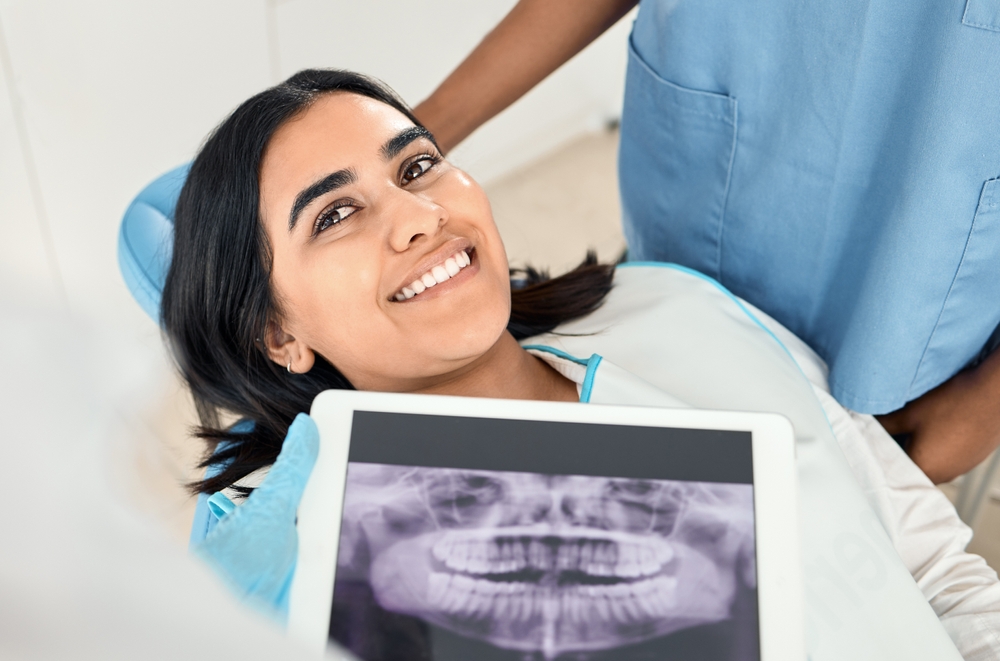
Woman,,Dentist,And,Smile,With,Dental,Xray,Or,Results,In

Dental X-rays, also called dental radiographs, create images of your teeth and surrounding structures.

A visual dental examination provides important information about the surfaces of your teeth, gums, and other areas of your mouth. However, some parts of your oral health are hidden from view.

X-rays can provide additional information about areas such as the spaces between teeth, tooth roots, jawbone, and developing teeth.

Your dentist can review these images alongside your examination findings and dental history to develop a more complete understanding of your oral health.

Why Are Dental X-Rays Needed?

Many dental conditions begin in areas that are difficult or impossible to see during a routine examination.

Depending on the type of image taken, dental X-rays may help your dentist:

  • Identify cavities between teeth
  • Evaluate the extent of tooth decay
  • Examine tooth roots
  • Assess the bone supporting your teeth
  • Look for signs of infection around a tooth
  • Evaluate impacted or developing teeth
  • Assess certain dental injuries
  • Monitor changes that have occurred over time
  • Gather information before certain dental procedures

An X-ray does not necessarily mean that treatment is required. It provides additional diagnostic information that your dentist considers along with your symptoms, examination, and dental history.

What Are the Different Types of Dental X-Rays?

Different X-rays provide different views of your teeth and surrounding structures. The type your dentist recommends depends on what needs to be evaluated.

Bitewing X-Rays

Bitewing X-rays typically show the crowns of the upper and lower teeth in the same area.

They are commonly used to look for cavities between teeth and can also provide information about the bone around the teeth.

Periapical X-Rays

A periapical X-ray provides an image of the entire tooth, including the crown, root, and surrounding bone.

These images can be useful when your dentist needs to examine a particular tooth or the area around its root more closely.

Panoramic X-Rays

A panoramic X-ray creates a broader image that includes the teeth, jaws, and surrounding structures.

It can provide an overview of your mouth and may be used when evaluating tooth development, wisdom teeth, missing teeth, or other areas that require a wider view.

Other types of dental imaging may also be used depending on the practice and the information required.

How Often Do You Need Dental X-Rays?

Dental X-rays do not need to be taken according to the same schedule for every patient.

How often they are recommended can depend on factors such as:

  • Your age
  • Current oral health
  • Cavity risk
  • Gum and bone health
  • Previous dental treatment
  • Symptoms or areas of concern
  • Existing restorations
  • Previous X-rays and when they were taken

A patient with a history of frequent cavities or an active dental concern may require imaging at different intervals than someone with a stable oral health history.

Your dentist can determine when new images are likely to provide useful diagnostic information.

Are Dental X-Rays Safe?

Dental X-rays use ionizing radiation to create diagnostic images, so radiation exposure is an important consideration.

The amount of radiation involved depends on the type of image and equipment being used. Dental professionals consider the need for an X-ray before recommending one and aim to obtain the diagnostic information needed while limiting unnecessary exposure.

Modern dental imaging techniques and equipment are designed to produce useful images using relatively low levels of radiation.

If you have questions or concerns about dental X-rays, your dental team can explain why a particular image is being recommended and how it will be used.

What Is the Difference Between Digital and Traditional Dental X-Rays?

Dental practices may use digital imaging systems or other radiographic technology.

With digital dental X-rays, an electronic sensor or imaging plate captures the image so it can be viewed on a computer. This allows your dental team to enlarge and review specific areas and store the images as part of your dental record.

The equipment and imaging systems available vary between dental practices. Regardless of the technology used, the purpose is the same: to provide diagnostic information that cannot always be obtained through a visual examination alone.

Do You Need X-Rays at Every Dental Checkup?

Not necessarily.

Dental X-rays are one part of the diagnostic process and do not automatically need to be taken at every routine visit.

Your dentist may review your previous images, current oral health, dental history, and risk factors before deciding whether new X-rays are appropriate.

If you develop a new symptom or dental problem, an X-ray may also be recommended even if you recently attended a routine examination.

Dental X-Rays and Treatment Planning

X-rays are not only used to look for cavities.

Depending on the treatment being considered, dental imaging can provide information about tooth roots, surrounding bone, tooth position, and other structures that may influence treatment planning.

For example, imaging may be used when assessing certain root canal treatments, extractions, dental implants, orthodontic concerns, or other restorative and surgical procedures.

The type and extent of imaging required depends on the individual treatment and clinical situation.

See More Than a Visual Exam Can Show

Dental X-rays provide additional information that can help your dentist identify, monitor, and understand changes that may not be visible during a routine examination.

Contact our dental team if you have questions about dental X-rays or would like to schedule a dental examination.

FAQs About Dental X-Rays in Wetaskiwin

Dental X-rays should not be painful. For some images, a small sensor or imaging plate is positioned inside your mouth, which can occasionally feel uncomfortable or awkward for a short period. Let your dental team know if you have difficulty with the sensor or a sensitive gag reflex.

There is no single schedule that applies to every adult. The appropriate interval depends on your oral health, cavity risk, dental history, previous images, symptoms, and the type of information your dentist needs.

Yes. X-rays can help identify certain cavities in areas that are difficult to inspect visually, particularly between neighbouring teeth. Your dentist interprets the images together with the findings from your dental examination.

Previous X-rays provide a useful record, but your oral health can change over time. New images may be recommended to evaluate a current concern or compare an area with earlier images. Your dentist can determine whether updated imaging is necessary based on your individual situation.

We strive to...

Create a welcoming environment where you feel heard, respected, and at ease throughout your visit.

Listen to your concerns, take treatment at a comfortable pace, and offer sedation options when additional support may help.

Take the time to understand your concerns, priorities, and goals before recommending treatment.

Build on more than 20 years of caring for patients from Wetaskiwin, Millet, Maskwacis, and surrounding communities.

Insurance & Billing

We want the cost of dental care to be clear and straightforward. Spring Dental follows the Alberta Dental Fee Guide, direct bills most insurance providers, and accepts the Canadian Dental Care Plan (CDCP).

Our team can help you understand your coverage, estimated treatment costs, and available payment options before treatment begins. Have questions about your insurance or CDCP coverage? Contact us and we’ll be happy to help.

Why Choose Spring Dental

Over 20 Years of Experience

Spring Dental has served Wetaskiwin and surrounding communities for more than 20 years. Led by Dr. Rahim Ali, our experienced team provides comprehensive dental care for children, adults, and seniors at every stage of their oral health.

CDCP & Direct Insurance Billing

Spring Dental accepts the Canadian Dental Care Plan (CDCP) and direct bills most insurance providers. We also follow the Alberta Dental Fee Guide and help patients understand expected costs and coverage before treatment.

Comprehensive Care in One Location

From routine cleanings and preventive care to root canals, dental implants, same-day crowns, Invisalign, sedation, and emergency dentistry, we offer a wide range of services conveniently from our Wetaskiwin dental clinic.

Hear From Our Patients

We’re grateful to the patients and families who trust Spring Dental with their care. Read what they have to say about their experiences with our team.